A story to
step into.
Architecture, gardens and memories reveal the identity of a historic estate in the heart of Campania.
Six centuries
of history.
The palazzo took its monumental form in the second half of the fifteenth century, during the Aragonese period. Its three storeys surround a U-shaped courtyard, with a piperno stone entrance bearing the family coat of arms. Originally associated with the d’Amico family, the estate later passed to the Tomasi and then to the Cocozza family. A grand staircase was added in the eighteenth century. The building was damaged during the fighting between Bourbon and Garibaldian forces in 1860; subsequent restorations and nineteenth- and twentieth-century changes shaped its present appearance.
More informationNature
as narrative.
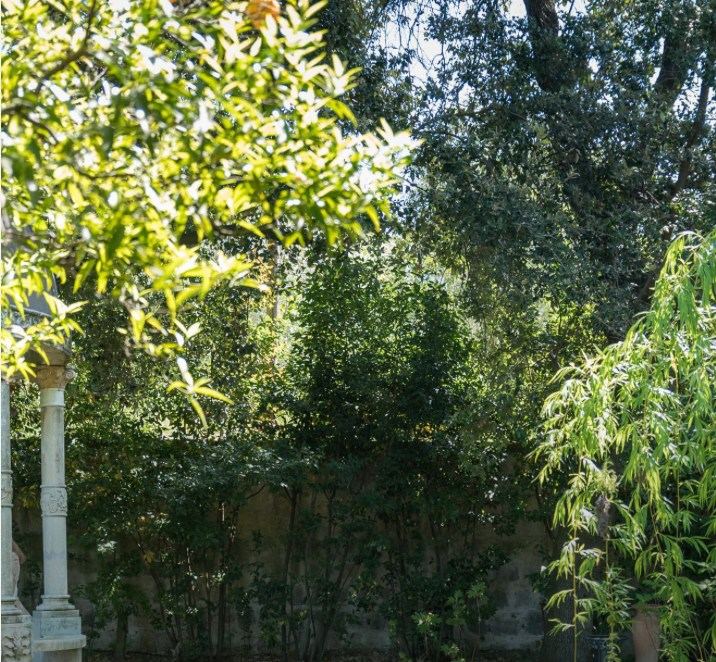
An Italian-style courtyard garden opens through a second piperno gateway to a Romantic garden of approximately one hectare. Mediterranean and exotic planting includes mature trees, roses, lavender, bay laurel, holm oak and wisteria. Visitors encounter a small lake, nine fountains, sculpture, an obelisk, a well and a circular Ionic temple. The greenhouse is used as a winter garden. The present landscape design is attributed to English architect Peter Curzon, while the authorship of the original layout remains debated.
More informationA place
of images.
The estate also has a place in cinema history. Between 1969 and 1970 Pier Paolo Pasolini chose the palazzo and its garden for scenes depicting Riccardo and Caterina in his film The Decameron, released in 1971 and based on Boccaccio’s work. The historic architecture and secluded paths became part of the film’s visual setting. Today the place continues to connect landscape, architecture, literature and cinema.
More informationDiscover it in person
The story continues
with your visit.
For information about cultural visits and the estate, contact us.
05 / Get in touch
Start
here.
A private visit, a special occasion or a question about the estate: tell us what you have in mind.